

The productivity race is real
AI agents are moving from chat into work. The most visible examples are aimed at making individual users more productive: coding agents, computer-use agents, research agents, and assistants that can operate tools on behalf of a person.
OpenAI’s Codex shows one version of this future for software teams: a cloud-based coding agent that can work on tasks in parallel, inspect a repository, propose changes, and return results for review. OpenAI’s ChatGPT agent points in the same direction for general knowledge work, combining browsing, research, tool use, and computer actions into a single agentic experience.
Anthropic has pushed a similar idea through Claude’s work products. Claude Code brought agentic coding into the terminal, while Anthropic’s enterprise direction has increasingly positioned Claude as a collaborator that can work with company context, documents, and tools. Open-source computer-use projects such as OpenClaw point to the same underlying ambition: let AI operate the computer more effectively, not just answer questions.
This is important progress. Personal agents will save time. They will help people write, code, research, summarize, analyze, and move faster across applications. But there is a limit to treating agentic AI primarily as a personal productivity layer.
For companies, the question is not only “how can each employee use AI?” The better question is “which business processes should AI help run, and how should the company control, measure, and improve that work?”
Personal agents create organizational blind spots
When agents live mainly at the user level, each person becomes a small automation island. That can be useful for experimentation, but it creates problems when the work matters to the business.
First, the organization loses control over objectives. One employee may ask an agent to prepare a report, another may ask it to update records, and another may ask it to draft customer responses. Each task may be reasonable on its own, but the company has limited visibility into whether the agent followed the right process, used the right data, respected the right rules, or produced the right business outcome.
Second, observability becomes fragmented. The company may know that employees are using AI, but not what the agents did step by step. Which documents were used? Which systems were touched? Which assumptions were made? Which outputs were accepted? Which errors repeated across teams? Without shared traces and outcome tracking, there is no reliable way to improve the process.
Third, personal agents can turn productivity into waiting time. A user delegates a task, then watches the screen while the agent runs. That may still be better than doing the whole task manually, but it is not the same as a business process that runs in the background, handles routine cases, escalates exceptions, and reports results.
Fourth, expertise does not automatically spread. One user may discover a good prompt, a good workflow, or a better way to connect an agent to a system. Unless that pattern becomes reusable infrastructure, it remains local knowledge. The organization gets pockets of AI skill instead of shared operational capability.
Application-specific agents solve part of the problem
Enterprise software platforms are responding with their own agent systems. Salesforce’s Agentforce is a strong example: it gives companies a way to create AI agents around customer, sales, service, marketing, commerce, and Salesforce data workflows. That matters because agents need access to business context, governed actions, and trusted records.
This kind of platform approach is a real step beyond individual prompting. It lets teams define topics, actions, guardrails, data access, and handoffs inside an existing business system. For organizations whose process is mostly inside Salesforce, that can be powerful.
The limitation is that most operational processes do not live inside one ecosystem. A revenue process might touch Salesforce, spreadsheets, ERP data, internal approval tools, email, contracts, and a finance database. A hospital workflow may involve patient communication systems, clinical records, billing rules, payer requirements, and internal quality review. A regulatory workflow may involve public literature, internal evidence files, document control, engineering records, and audit trails.
If the agent is tied too tightly to one application, it can automate one part of the process while leaving the rest of the work for people to stitch together.
The shift: AI automation is a business issue
The useful shift is to stop thinking of agents only as user productivity tools and start thinking of them as business process infrastructure.
That means the company, not each individual user, defines the process:
- What is the input?
- Who owns the process?
- Which systems and knowledge sources are approved?
- What should the agent be allowed to do?
- When does a human need to review or approve?
- What is the expected output?
- What metrics show that the process improved?
- What should happen when the agent is uncertain or wrong?
Once those questions are answered, the agent becomes part of a managed workflow. It can still help people, but its value is no longer limited to one person’s screen. The company can reuse it, monitor it, improve it, and connect it to real outcomes.
This is where successful AI adoption starts to look less like a collection of clever prompts and more like operations design.
Processes need inputs, outputs, controls, and evidence
An AI-powered process should be designed like any other production process.
It needs defined inputs. The agent should know which documents, records, systems, forms, tickets, messages, or events can trigger work.
It needs clear outputs. A useful agent does not merely “help.” It updates a record, prepares a quote, creates a report, classifies a request, routes a case, drafts a response, schedules a follow-up, or produces evidence for review.
It needs controls. Access should be scoped. Sensitive data should be handled according to policy. Some actions should require approval. Some workflows should run only inside a customer-controlled environment.
It needs observability. Teams should be able to see what happened: the request, the context retrieved, the model used, the tools called, the decision path, the final output, and the business result.
And it needs a feedback loop. If the agent fails, the organization should be able to identify why, fix the process, and measure whether the fix worked.
The real gain is shared capability
The biggest opportunity is not that one person can work faster. It is that a company can turn repeated work into shared AI capability.
A good process implementation teaches the organization. It captures what works. It makes successful patterns reusable. It gives managers and operators a way to understand performance. It reduces the dependency on one person’s private prompts or browser session. It lets a team improve the process without starting over every time.
This is also how companies avoid the productivity trap. Instead of asking employees to wait while agents perform isolated tasks, the company can move routine work into managed background execution. People spend more time reviewing exceptions, improving rules, making decisions, and designing better processes.
That is a different model of productivity. It is not “every employee gets a smarter computer.” It is “the company builds smarter operations.”
Where Guanta fits
Guanta is built around that second model.
Think of it as an enterprise path for the computer-use and agentic automation movement: automate with AI, but do it with security, control, and observability at the organization level.
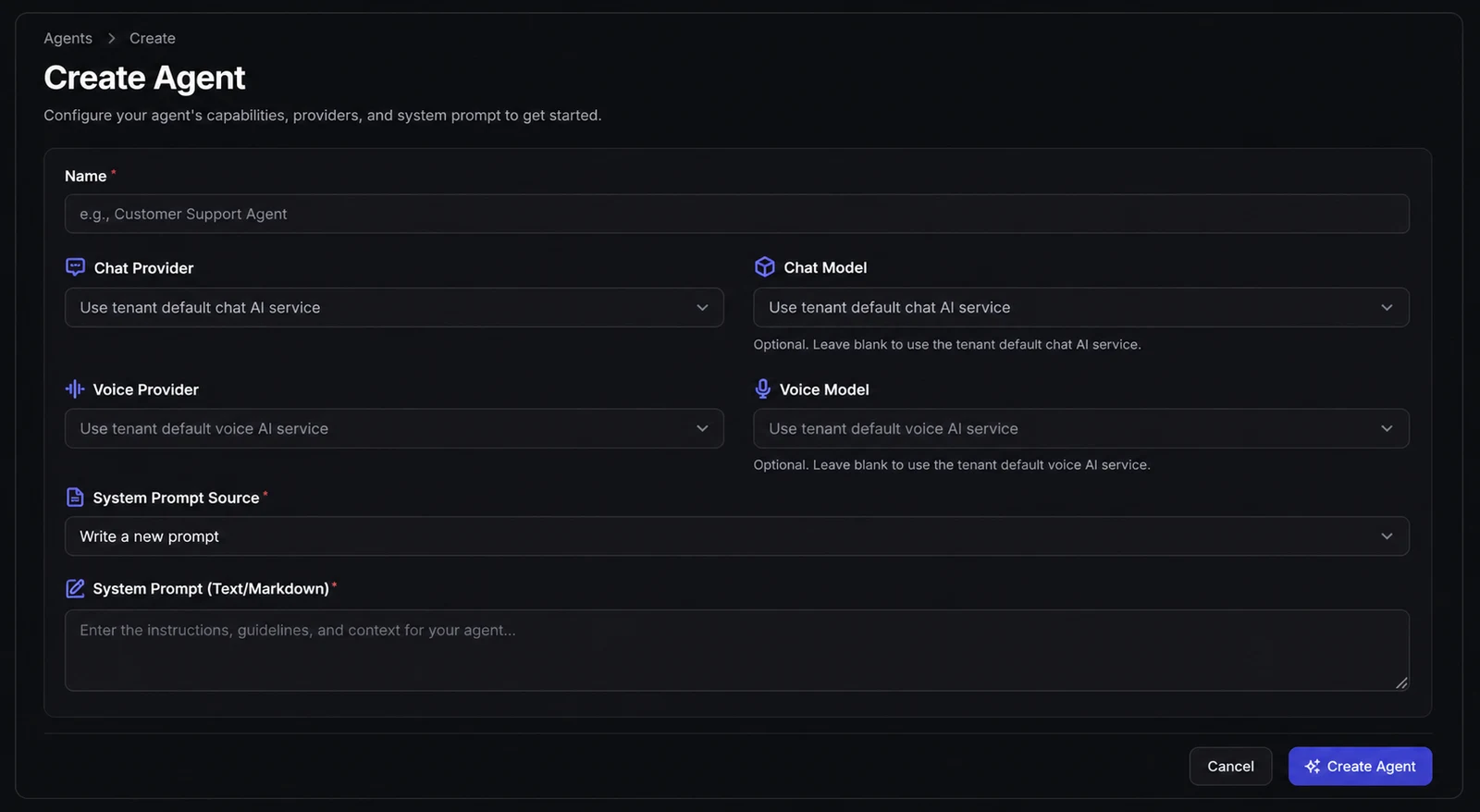
Guanta helps teams create agents connected to company knowledge, systems, and workflows. When a process needs custom applications, integrations, structured data, scheduled execution, or deployment in a controlled environment, Guanta helps build it and run it in production.
The goal is not to replace personal AI tools. Those tools are useful, and many teams will keep using them. The goal is to make the important work visible, reusable, measurable, and governable.
For enterprise AI, that is the next frontier. Agents should not only make users faster. They should help companies run better processes.